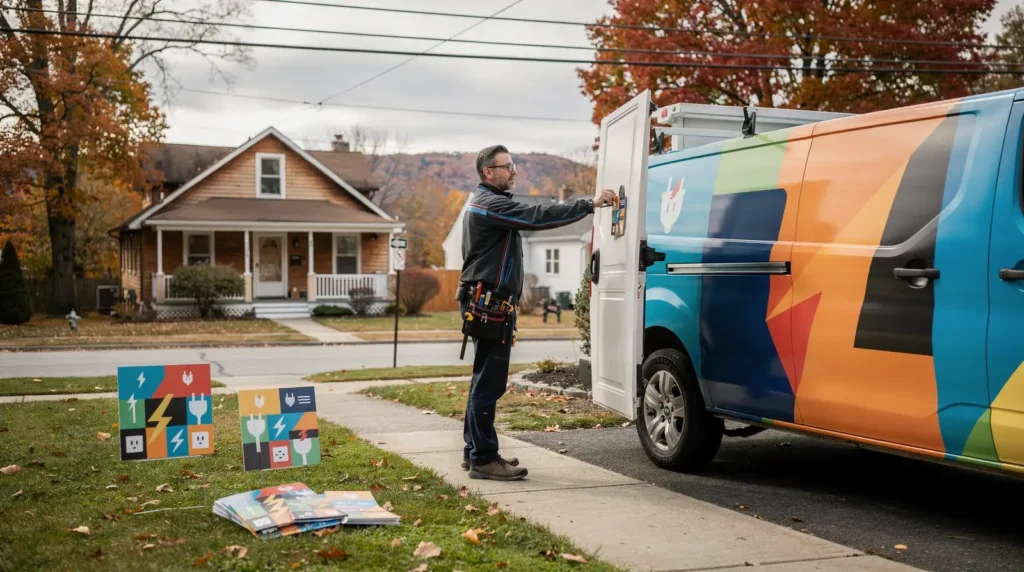
Roofing leads are raw contact lists, often resold to multiple contractors. Roofing appointments are pre-qualified, confirmed times on a verified homeowner’s calendar. Exclusive appointment models deliver verified in-home meetings directly to sales closers. The difference is a booked slot versus a shared name.
What’s the real difference between leads and appointments?
Roofing leads and roofing appointments are not the same product. A lead is a contact. An appointment is a confirmed time on a verified homeowner’s calendar. The gap between those two things is where most roofing sales operations lose money.
Contractors who confuse the two terms pay for potential instead of meetings. A roofing lead represents a name and phone number, often sold to multiple companies. An exclusive roofing lead appointment locks in a specific date and time with a homeowner who expects the visit. The operational cost sits in the space between contact and confirmed meeting.
Why does the lead-to-appointment gap destroy roofing margins?
The gap consumes time, labor, and cash. Sales teams chase unverified contacts. Closers burn fuel driving to no-shows. Office staff spend hours qualifying lists instead of supporting active deals. The Roofing Leads vs Appointments guide from PreBookedRoofingLeads.com notes that this gap is where most roofing sales operations lose money. Every hour spent on unqualified contacts is an hour stolen from closable opportunities.
| Factor | Roofing Leads | Roofing Appointments |
|---|---|---|
| Definition | Contact information only | Confirmed calendar time |
| Homeowner Expectation | None or vague | Expects a specific meeting |
| Exclusivity | Often shared across companies | Typically exclusive |
| Sales Team Activity | Cold outreach and qualification | Show up and close |
| Conversion Predictability | Low and variable | High and measurable |
Roofing appointment setting removes the qualification burden from sales teams. A third party verifies the homeowner, confirms the need, and books the time. The closer arrives to a warm conversation, not a cold door knock. This model shifts the risk from the contractor to the appointment provider.
How does exclusive appointment setting change the sales process?
Exclusive appointment setting transforms the sales day. Closers receive pre-qualified, confirmed meetings daily instead of a list of names. The homeowner agreed to the visit. The need is verified. The time is set. MR DOS Technologies builds complete growth systems that integrate this approach with local SEO, web design, ads, CRM, and AI follow-up for Upstate New York businesses. The company’s roofing marketing agency services connect appointment-setting discipline with digital infrastructure that captures demand.
Contractors who buy roofing leads without appointment verification accept hidden costs. They pay for the list, then pay again in labor to qualify it. The true cost per sat appointment often exceeds the price of a pre-booked meeting. Appointment models surface the real number that matters: cost per shown inspection.
Why do raw shared leads drain your margins?
Raw shared roofing leads drain margins because the real cost hides in wasted time, not in the purchase price. A roofing contractor pays for a name and phone number, then pays again through every hour spent chasing a homeowner who never committed to anything. According to the Roofing Leads vs Appointments: Contractor Guide, roofing contractors with 5 to 20 employees rarely lose money on bad roofs. They lose money on bad pipeline.
The root of bad pipeline is straightforward. The same guide reveals the most common source is a misunderstanding of what contractors are actually buying when they purchase a lead. A lead is simply a contact that might be interested. The homeowner did not agree to a meeting, did not confirm availability, and probably received calls from three other roofers that same morning. Every unproductive dial, every no-show, and every price-only shopper eats directly into net profit.
What separates a lead from a confirmed appointment?
A lead offers potential. An appointment provides a meeting. The operational gap between the two is where most roofing sales operations lose money. MR DOS Technologies addresses this gap differently. The company provides a fully integrated digital growth system tailored for local businesses, unlike typical marketing agencies that offer fragmented solutions. A disconnected approach forces a roofer to stitch together lead generation, follow-up, and scheduling on their own. Fragmentation causes leads to slip through without conversion.
How does fragmented marketing increase acquisition cost?
Fragmented marketing multiplies costs silently. One vendor sends contacts. Another handles ads. None ensure the homeowner shows up. This disjointed process stretches sales cycles and inflates the cost per closed deal. MR DOS Technologies ensures a connected approach, allowing each digital marketing effort to enhance and be enhanced by others, driving better outcomes. When buy roofing leads decisions ignore the full system, the contractor absorbs the cost of misalignment. The pipeline fills with names instead of revenue.
The alternative transforms the math. Roofing appointment setting and exclusive roofing leads invert the risk. A homeowner who already agreed to a confirmed time puts a closer in front of a decision-maker, not a voicemail box. Margins recover when every lead becomes a conversation.
How does pay-per-appointment compare to buying leads?
Pay-per-appointment delivers a confirmed meeting. Buying roofing leads delivers a contact name. The operational and financial gap between those two outcomes determines whether a roofing company grows profitably or burns cash on unqualified prospects. Lead Engine notes that comparing per-appointment pricing with buying leads misses the number that matters: what a contractor spends for each inspection that actually happened.
The core difference is certainty. A lead represents potential. An appointment represents a verified homeowner who agreed to a specific time on a closer’s calendar. Roofing companies with 5 to 20 employees rarely lose money on bad roofs. They lose money on bad lead flow, wasted drive time, and sales reps sitting idle while chasing unresponsive contacts.
| Factor | Pay-Per-Appointment | Buying Leads |
|---|---|---|
| What contractors receive | Confirmed calendar time with a qualified homeowner | Contact information requiring follow-up |
| Sales rep activity | Shows up and presents | Dials, qualifies, and schedules |
| Cost metric that matters | Spend per inspection that occurred | Spend per name, regardless of outcome |
| Exclusivity | Often exclusive to one contractor | Frequently resold to multiple roofers |
| Revenue predictability | High; tied to appointments shown | Low; tied to contact-to-close conversion |
What makes an appointment model different from shared leads?
Shared leads get sold to several contractors simultaneously. The fastest dialer wins. Exclusive roofing leads from providers like HyperHired arrive as pre-set appointments where ads run for one company alone. Every homeowner gets qualified by phone before a time lands on the closer’s calendar. No competition exists at the door.
Why does cost-per-inspection matter more than cost-per-lead?
A lead that never answers the phone costs infinitely more than an appointment that closes. The metric that governs profitability is total spend divided by inspections that actually occurred. Lead Engine structures programs around a weekly floor of shown inspections rather than per-lead pricing. That shift aligns vendor incentives with contractor outcomes. MR DOS Technologies builds digital growth systems with the same principle: transparency and performance measured by results, not vanity metrics.
What makes exclusive roofing leads more valuable?
Exclusive roofing leads carry value because they represent a confirmed meeting, not a shared contact. A homeowner has already agreed to a specific time with a closer. The alternative is a list resold to every roofer in the county, where five competitors chase the same name. That difference determines whether a sales team spends its day closing or chasing.
How does exclusivity change the sales dynamic?
Exclusivity removes the race. In the competitive roofing industry, a confirmed appointment that belongs to a single contractor eliminates the scramble. The Exclusive Roofing Leads app delivers home roof inspection appointments exclusively to one roofer, ensuring no competitors receive that lead. The closer walks into a scheduled conversation, not a cold knock. This model shifts the team’s energy from prospecting to presenting.
Why do shared leads cost more than their price tag?
Shared leads carry hidden operational costs. A contact sold to multiple roofers forces speed over preparation. Closers rush. Homeowners feel pressured. Conversion rates drop. The time spent dialing unresponsive names accumulates across the week. Exclusive appointments reverse that math. Each confirmed time on the calendar represents a homeowner who expects the meeting. The closer prepares, arrives, and sells. The cost per closed deal falls even when the per-lead price looks higher.
Roofing appointment setting through MR DOS Technologies builds this exclusivity into a complete growth system. The company combines local SEO, web design, ads, CRM, and AI follow-up to generate predictable booked estimates. The system qualifies every homeowner by phone and books the time directly on the closer’s calendar. No shared lists. No wasted dials. The value sits in the certainty of a kept appointment, not the hope of a returned call.
How can an integrated system book more appointments?
An integrated digital acquisition pipeline generates predictable booked roofing estimates. The system combines local SEO, targeted ads, CRM, and automated speed-to-lead follow-up into one connected workflow. Fragmented marketing tools create gaps where homeowner interest evaporates. A unified system closes those gaps and converts more inquiries into confirmed appointments.
Roofing leads lose value the moment a contractor delays a response. Speed-to-lead automation inside an integrated CRM triggers immediate follow-up when a homeowner submits a form or calls. That instant engagement captures intent before competitors reach the same prospect. Without integration, a lead sits in an inbox while the homeowner books someone else.
What makes an integrated system different from standalone tools?
Standalone tools operate in silos. An ad platform generates clicks. A separate CRM stores contacts. A third tool sends emails. The handoff between each tool introduces friction and delay. An integrated system connects every stage: the ad captures the lead, the CRM qualifies it, and automated messaging schedules the appointment. No data gets lost between platforms.
MR DOS Technologies provides a fully integrated digital growth system tailored for local businesses. The agency ensures a connected architecture where each marketing effort enhances the others for better outcomes. Local SEO drives organic visibility. Targeted ads capture high-intent traffic. The CRM nurtures every contact. Automated follow-up converts interest into booked estimates. Each component feeds the next, creating a compounding effect on appointment volume.
How does automated follow-up increase appointment bookings?
Automated follow-up removes human delay from the scheduling process. A homeowner who requests a roof inspection receives an immediate confirmation, then a sequence of reminders and two-way SMS options. The system handles routine communication while the sales team focuses on in-home presentations. This roofing appointment setting approach turns passive inquiries into confirmed calendar slots without manual chasing.
The agency operates with a senior-level team, avoiding handoffs, to provide precise and effective digital growth systems. That structure eliminates the miscommunication common in agencies that pass clients between departments. A single senior team manages the entire pipeline, from ad creative to CRM workflows to customer communication solutions that keep homeowners engaged until the appointment.
What results do integrated systems produce for contractors?
OMI MedTech saw a significant increase in traffic and engagement after MR DOS helped sharpen their digital strategy with SEO and conversion-focused updates. The same integration principles apply to roofing contractors seeking exclusive roofing leads. When SEO, ads, and follow-up work as one system, traffic converts at higher rates. More site visitors become phone calls. More calls become booked appointments.
Contractors who buy roofing leads without an integrated follow-up system waste a portion of every dollar spent. The lead arrives, but the response lags. The homeowner moves on. An integrated system ensures every lead receives immediate, automated engagement. That speed difference determines whether a marketing budget produces appointments or just contact names.
Which approach should your roofing business choose?
The right choice depends on a contractor’s sales process and pipeline maturity. Roofing contractors with 5 to 20 employees rarely lose money on bad roofs. They lose money on bad pipeline. The most common source is a misunderstanding of what they are actually buying when they purchase roofing leads. A lead is a contact. The gap between those two things is where most roofing sales operations hemorrhage cash.
What is the real cost difference between leads and appointments?
The number that matters is the cost per inspection that actually happened. Buying raw roofing leads often means purchasing contact information shared with multiple competitors. The contractor then spends hours calling, qualifying, and scheduling. Many of those contacts never convert to a sit-down meeting. Roofing appointment setting flips that model. A service pre-qualifies the homeowner by phone and books a confirmed time on the closer’s calendar. The contractor pays for a meeting, not a name.
| Factor | Buying Roofing Leads | Roofing Appointment Setting |
|---|---|---|
| What you buy | Contact information | A confirmed calendar slot |
| Competition | Often shared with other roofers | Typically exclusive to one contractor |
| Sales team task | Cold calling and qualifying | Showing up and closing |
| Pipeline risk | High; many leads never answer | Low; the homeowner expects the visit |
How do exclusive roofing leads change the sales dynamic?
Exclusive roofing leads remove the race to the door. When a lead is sold to only one contractor, the sales conversation shifts from price defense to value presentation. The homeowner is not fielding five calls. The contractor is not rushing to be first. This dynamic protects margins and lets a closer sell on craftsmanship and trust. MR DOS Technologies builds complete growth systems that integrate local SEO, web design, ads, CRM, and AI follow-up. This connected approach ensures that every marketing dollar feeds a system designed to produce qualified, exclusive opportunities rather than fragmented, shared contact lists.
Why does pipeline quality matter more than lead volume?
A packed calendar of unqualified contacts creates false confidence. The team spends evenings chasing homeowners who never intended to buy. A smaller number of pre-set, confirmed appointments produces higher close rates and predictable revenue. MR DOS Technologies focuses on transparency and performance, ensuring clients receive genuine, data-driven results. A marketing strategy consultation helps roofing company owners audit their current pipeline and identify where money leaks between the ad click and the signed contract. The agency’s senior-level team avoids handoffs, delivering a unified system tailored for local businesses across Upstate New York.
Conclusion
The choice between buying leads and booking appointments determines whether your marketing budget funds a pipeline or a list of names. A connected system that captures, qualifies, and schedules every inquiry turns ad spend into confirmed calendar slots. That shift from chasing contacts to closing appointments protects your margins and your team’s time.