Google Local Services Ads for contractors cost only for leads, not clicks. Contractors pay per phone call or message from potential customers. The Google Verified badge builds consumer trust and prominently displays the business in local search results. Pricing varies by market and trade; contact MR DOS Technologies for a customized cost estimate.
What are Google Local Services Ads for contractors?
Google Local Services Ads contractors use are pay-per-lead advertisements that sit at the very top of local search results. These ads connect service businesses directly with nearby customers who are ready to hire. A contractor pays only when a potential client calls or sends a message through the ad.
The ad unit displays a business name, star rating, hours of operation, and service area. Qualified businesses also carry a Google Guaranteed home services badge, which signals that Google has verified the company’s licensing, insurance, and background checks. This badge builds immediate trust before a prospect ever picks up the phone.
The payment model sets these ads apart from traditional search campaigns. Contractors do not pay for impressions or clicks. Google charges exclusively for valid customer contacts, phone calls and messages that represent genuine booking intent. That structure eliminates wasted spend on browsers who never convert.
How does the pay-per-lead model work for contractors?
A contractor sets a weekly budget based on the number of leads the business wants to receive. Google’s system then displays the ad when local users search for relevant services. The contractor receives a phone call or message and gets charged for that lead. Disputed or spam leads can be credited back, which protects the advertising budget from low-quality contacts.
What information appears in a Local Services Ad?
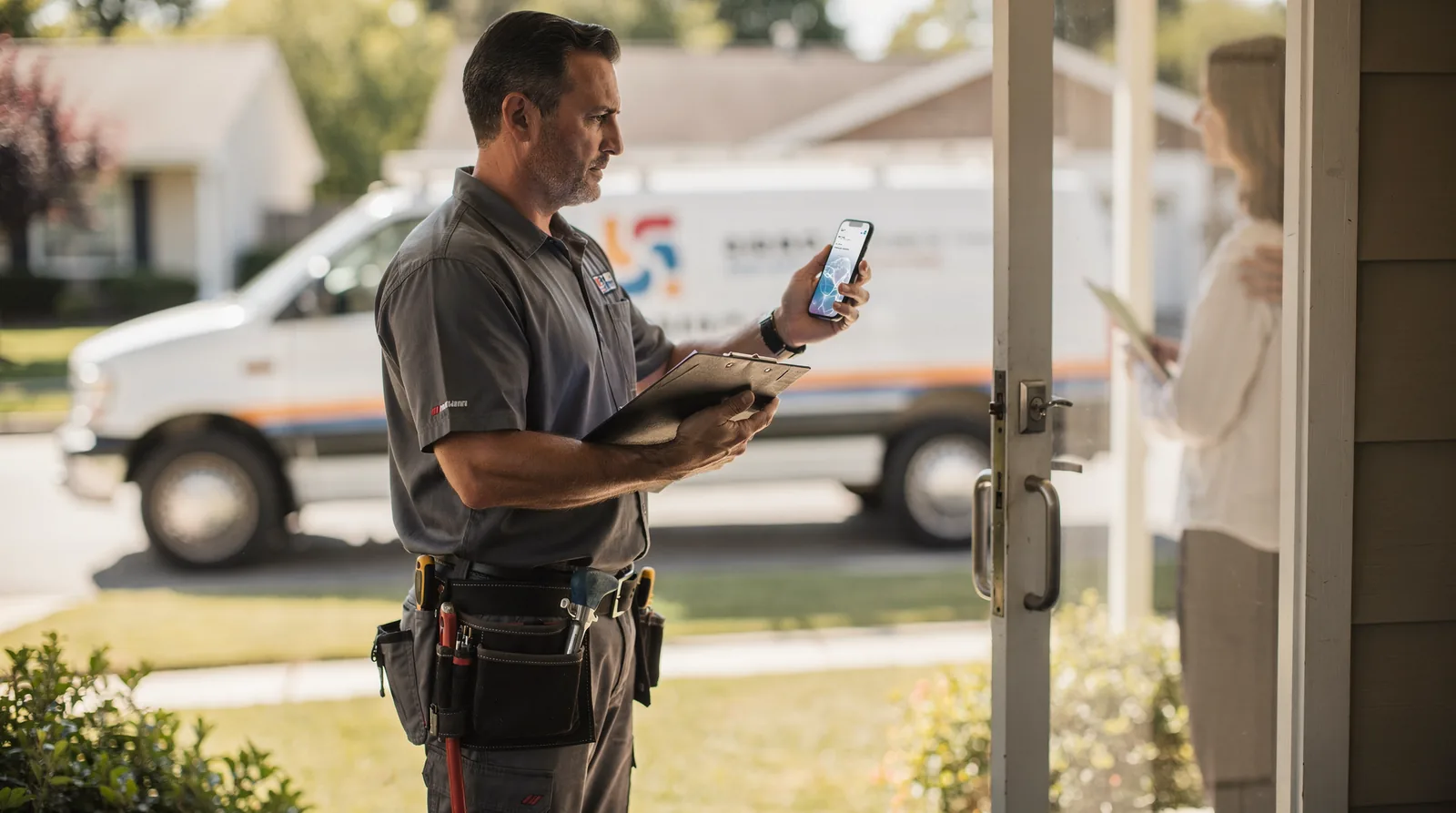
The ad preview shows the company name, aggregate review score, business hours, and the geographic area served. When a user clicks the ad, a full business profile opens with additional details including a list of services, customer reviews, and the Google Verified badge for businesses that passed the screening process. This profile gives homeowners everything they need to decide before making contact.
The LSA cost per lead varies by trade, market competition, and how quickly a contractor answers incoming calls. Response speed and review volume directly influence ad ranking. A contractor who answers promptly and maintains strong ratings appears higher in results and pays a competitive rate for each qualified lead.
How much does LSA cost per lead for contractors?
LSA cost per lead for contractors varies by trade and market. The spread is wide because lead value differs sharply across service categories.
HVAC and water restoration sit on the higher end of that range. Roofing and general contracting land in the middle. Pest control and house cleaning tend to come in at the lower end. A contractor’s city competition level and badge status also move the number significantly, according to the Complete Guide to Google Local Services Ads for Contractors.
Real account data confirms the mid-range figure. PPC.io pulled 90 days of Local Services data from three US service accounts: two pool service companies and a landscaper. Those accounts spent $4,508 and received 149 leads. Google charged for 89 of them, which works out to $51 per charged lead.
What factors change the LSA cost per lead?
Three variables drive most of the variation:
- Trade type: Emergency and high-ticket services like HVAC and water restoration command higher lead prices.
- Market competition: Dense metro areas with many bidding contractors push costs upward.
- Badge status: Holding the Google Verified badge influences both ranking and lead pricing.
Is $51 per lead typical for contractors?
The $51 figure from PPC.io reflects pool service and landscaping accounts, not all trades. Roofing and general contracting typically run higher than that midpoint. HVAC and water restoration leads cost more still. Contractors should treat the realistic planning envelope as determined by their specific trade and city.
What is the Google Guaranteed badge for home services?
The Google Guaranteed home services badge is a trust signal that appears on Local Services Ads. It shows potential customers that a business has passed Google’s screening and verification process. Its purpose remains the same: to build confidence before a customer makes that first call.
Contractors who earn the badge gain a distinct advantage. The badge helps a business stand out in Google Search results and maximizes visibility for local searches. Without it, a listing blends into a crowded field of competitors. That lost visibility translates directly into missed phone calls and jobs that go to another contractor.
How does the Google Verified badge help contractors stand out?
Google Local Services Ads contractors receive prime placement above regular search ads. This positioning puts a verified business directly in front of homeowners who are ready to hire. The ad displays the business name, rating, and the badge itself. A customer sees immediate proof of credibility.
The badge also changes the economics of advertising. With Local Services Ads, a contractor pays only for customers, not for clicks. A verified badge increases the likelihood that a searcher chooses to call or message. Every impression without a click becomes a missed opportunity when trust is absent.
What changed when Google Guaranteed became Google Verified?
The core function did not change. The screening process still checks business licenses, insurance, and background.
The rebranding reflects a broader push to unify trust signals across Google’s platforms. For home service businesses, the practical effect is identical. A verified badge continues to signal that Google has vetted the company and stands behind the quality of its services.
How do LSA for roofers and other trades rank?
Ranking in Google Local Services Ads contractors depends on three measurable factors. Response speed, review strength, and profile completeness determine ad position. A contractor who answers leads within seconds consistently outranks a competitor who waits hours. The system rewards businesses that prove they are responsive and trustworthy.
What factors influence LSA ranking the most?
Google evaluates each contractor’s profile against a set of performance signals. The primary signals include how quickly the business answers incoming calls and messages, the volume and quality of customer reviews, and how thoroughly the business profile is filled out. A complete profile lists services offered, service area, hours, and accurate contact details. Contractors can edit this information at any time through the platform, which keeps the profile current as services or coverage areas change.
LSA for roofers and similar trades face a distinct competitive landscape. Roofing and general contracting sit in the middle of the cost-per-lead range, according to data from PushLeads. HVAC and water restoration run on the higher end, while pest control and house cleaning tend to come in at the lower end. A roofer’s city and local competition level further shape both ranking and lead cost.
How does review strength affect ad placement?
Review strength acts as a direct ranking lever. A contractor with a 4.8-star rating and dozens of recent reviews signals reliability to the algorithm. That signal pushes the ad higher than a competitor with fewer or lower-rated reviews. The Google Guaranteed home services badge adds another layer of trust. Earning that badge requires passing background checks and maintaining strong performance metrics. Without it, a contractor loses visibility to verified competitors in the same market.
Response time creates a compounding effect. A contractor who answers leads in under 30 seconds builds a track record of reliability. The system notes that pattern and rewards it with better placement. Slow response times push a profile down, regardless of review count. The LSA cost per lead also ties back to these ranking factors. A higher-ranked ad often pays a lower effective cost because the system prioritizes quality signals over bid amount. Contractors who optimize their profiles, answer quickly, and cultivate strong reviews build a ranking advantage that competitors cannot easily replicate. For roofers seeking a complete system that connects ads to follow-up, a roofing marketing agency approach integrates these ranking disciplines into one workflow.
Why do high lead volumes fail without CRM and AI follow-up?
High lead volumes from Google Local Services Ads contractors generate phone calls and messages that demand immediate attention. Without a system to capture and respond, those leads evaporate within minutes. A contractor’s ad ranking depends directly on response speed. Slow follow-up pushes the business lower in search results, shrinking future lead flow and wasting the ad spend that generated the inquiries in the first place.
How does response speed affect LSA ad ranking?
Google’s algorithm weighs how fast a contractor answers leads when deciding ad placement. A roofing company that picks up on the third ring outranks one that returns calls an hour later. The ranking formula also factors in review strength and profile completeness, but response time acts as a real-time throttle. Missed calls and delayed replies compound the damage. Each unanswered lead signals lower reliability, and the platform responds by showing the ad to fewer potential customers.
What happens to leads that sit in voicemail or email?
Leads from LSA for roofers and other trades arrive as phone calls and messages through the ad platform. A voicemail sitting unchecked for two hours is a dead lead. Homeowners with a leaking roof or a broken water heater call multiple contractors in quick succession. The first responder wins the job. MR DOS Technologies builds complete growth systems that include CRM setup and marketing automation to route every lead instantly. Automated follow-up triggers a text or call within seconds, not hours.
Google Guaranteed home services badges build trust, but trust alone does not close jobs. A verified badge attracts the click. A fast, organized response converts it. Without CRM and AI follow-up, high LSA cost per lead becomes a liability. Contractors pay for leads they never touch, and the ranking penalty compounds the loss. The agency’s approach ties transparency and performance together. Every lead gets tracked, every response gets measured, and no inquiry falls through the cracks.
Conclusion
A contractor who invests in Google Local Services Ads without a system to capture and respond to every lead loses the ranking advantage the badge provides. The verified badge earns the lead, but response speed and review strength determine who keeps it. The next step is building the infrastructure that turns ad spend into booked jobs.